Animals life is full of fascinating moments, incredible diversity, and magical survival stories, whether it’s the tiny ant in your backyard or the massive blue whale in the deep ocean, animals show us how life adapts, survives, and thrives, across the planet, millions of animal species live in their own unique ways, from wild jungles to freezing polar zones. Understanding animals life helps us see the bigger picture of nature, balance, and the planet we all share.
Share:
Group of Giraffe giraffa camelopardalis shimmer colors
Animal Species and Wild Diversity
When we talk about animals life, we’re really talking about an amazing variety of creatures, paraphs. Some animals are warm-blooded, like lions and humans, but others are cold-blooded, like snakes and fish, while some breathe underwater, and others fly above the clouds. This mix is what scientists call animal species diversity. New species are still being discovered, especially in rainforests, oceans, and even deserts. Animals come in all shapes, sizes, and colors — each with a special role in the environment.
Ecology and the Web of Life
Animals ecology is about how animals fit into the world around them. Some animals are hunters, others are grazers, and many are both, each animal has a job, whether it’s pollinating flowers, spreading seeds, cleaning up dead plants, or keeping insect populations in check, that’s why animals are a key part of ecosystems, from coral reefs to mountain forests, every place on Earth depends on animal life to stay healthy.
Reproduction and New Life
Reproduction is a big part of animal’s life. Without it, species wouldn’t survive! Animals reproduce in many ways. Some lay eggs, like birds and reptiles. Others give birth to live young, like mammals. Even the ways they care for their babies can be very different. Elephants carry their young for almost two years before birth. Frogs might lay hundreds of eggs in water and never see them again. This variety shows how nature finds different paths to the same goal: keeping life going.
Growth, Change, and Development
From tiny babies to full-grown adults, animals development is a fascinating journey. While some animals, like butterflies and frogs, go through big changes called metamorphosis, a caterpillar turning into a butterfly is one of the most magical transformations in nature. Other animals grow slowly but steadily, like whales or giraffes. The way animals develop depends on their environment, species, and even how they’re raised by their parents.
Share:
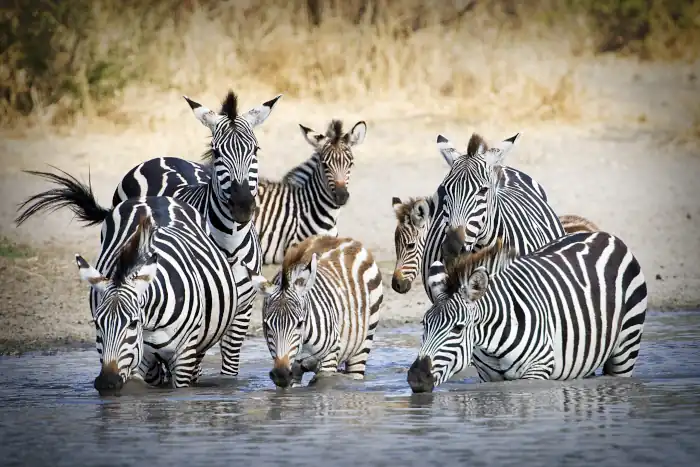
Herd of wild zebra drinking at water hole
Unique Characteristics and Cool Features
Every animal has special characteristics that make it different. Some have sharp teeth, others have long tails. Owls can turn their heads almost all the way around. Chameleons change color. Penguins swim like fish but walk like people. These unique structural features help animals survive where they live. Some are great at hiding. Others scare away enemies, and many use these features to find food, protect their young, or find a mate.
Where the Word “Animal” Comes From
Let’s talk about animals etymology — that’s just a fancy way to say where the word comes from, but “Animal” comes from the Latin word animalis, which means “having breath” or “living being.” That’s a cool reminder that animals are all about life and motion. The word has traveled through languages, but the meaning stays the same: beings that breathe, move, and react.
The Animal Kingdom Explained
In science, animals belong to their own big group called the animals kingdom, it is part of how scientists organize all living things. The animal kingdom includes everything from tiny jellyfish to giant elephants, and it’s split into smaller groups, like mammals, reptiles, birds, amphibians, fish, and invertebrates (which are animals with no backbone, like insects and worms). This way of sorting animals helps scientists study how different species are related.
Major Groups and Where They Live
The world is full of different animals habitats. Animals in the ocean live very differently than those in the desert or rainforest. In science, animals are grouped by their phyla — large categories that describe their body type and structure. Insects, for example, are the most common group on Earth, followed by mollusks like snails, annelids like worms, arthropods like crabs, and vertebrates like us. Each phylum has species that have adapted perfectly to their specific place in nature.
The Origin and Evolution of Life
The story of animals evolutionary origin is like reading the oldest book in history. Scientists believe animals started as simple sea creatures over 600 million years ago. Over time, they evolved and changed. Some moved onto land. Others stayed in the ocean. Evolution helped animals grow legs, wings, brains, and all the other features we see today. It’s still happening too — animals keep adapting to survive in a changing world.
Understanding Animal Phylogeny
Animals phylogeny is how scientists trace animal families through time, think of it like a giant family tree. It shows how different animals are connected through evolution,for example, whales and cows might not seem similar, but they actually share a common ancestor, and therefore understanding phylogeny helps explain why some animals look or behave similarly, even if they live in totally different places.
Share:
Elephant in the African savanna at sunset
Final Thoughts: Comparing Continents in Animals Life
When you explore animals life across continents, it’s like flipping through the coolest nature photo album ever. while Africa harbors lions, elephants, zebra,s and giraffes. South America has vibrant colored parrots and furtive jaguars. Asia is where you’ll encounter pandas and tigers. There are kangaroos and koalas in Australia that do not occur anywhere else. Foxes and deer abound in Europe, with bears, bison, and wolves constituting much of North America. And then there is Antarctica, where penguins reign!
Each continent has its own animal story, and climate, geography, and human culture all play a role in shaping the animals that live there, for example, camels are built for deserts, while polar bears survive in freezing weather. This global variety shows us that no matter where you go, animals life is full of surprises and beauty.
Curated Suggestions for products and More.
Love learning about animals life and their amazing world? Dive deeper with expert documentaries, interactive books, or even visit a local wildlife center. You can also support animal protection programs around the globe (AFFILIATE LINK). Your curiosity and care can make a real difference.
Disclosure: This site participates in various affiliate programs, including Amazon Services LLC Associates, eBay Partner Network, AliExpress Affiliate Program, and others. This means we may earn a commission on qualifying purchases made through links on this site, at no additional cost to you.







Share: